
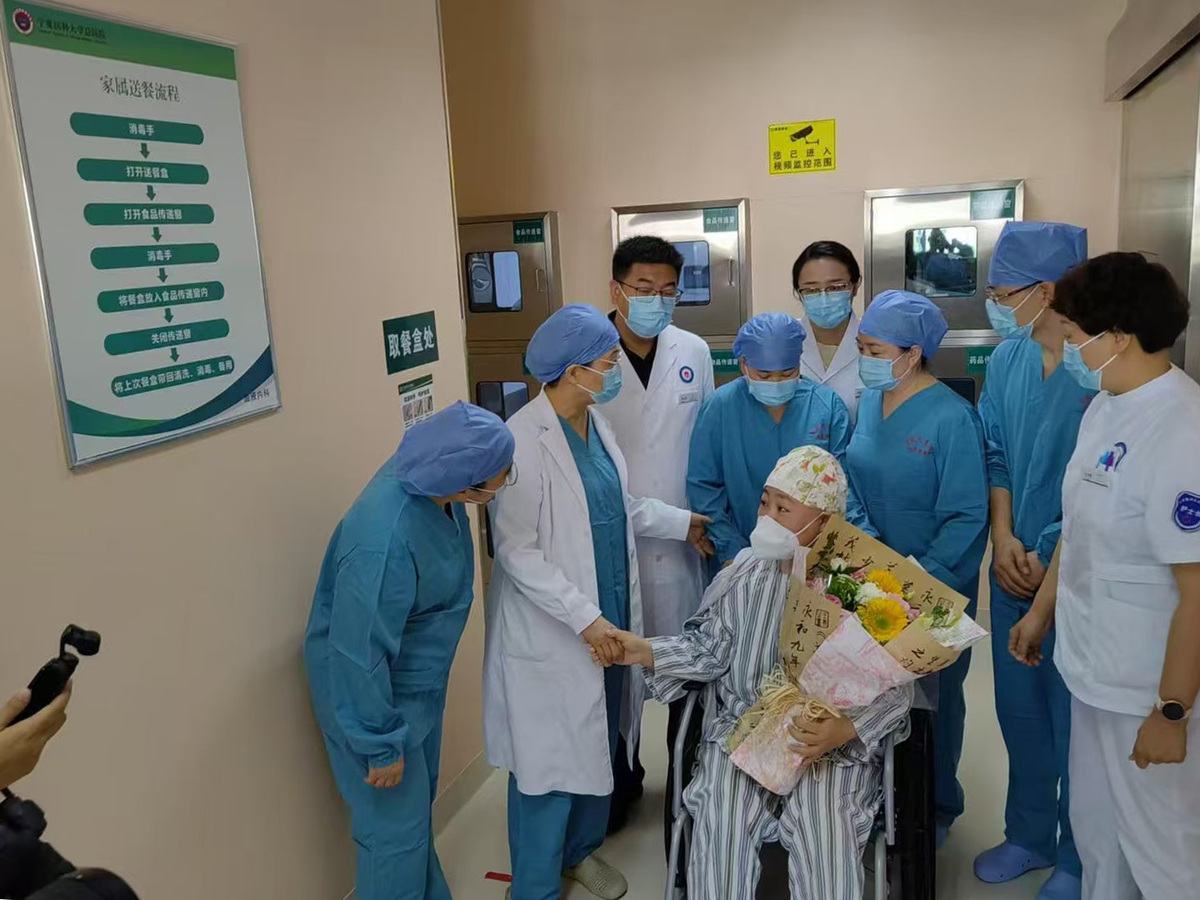
The recent successful completion of a haploidentical hematopoietic stem cell transplant (haplo-HSCT) at the General Hospital of Ningxia Medical University marks a critical turning point for healthcare accessibility in Northwest China. By mastering this complex procedure, Ningxia has effectively broken a long-standing "geographical bottleneck" that previously forced patients with severe blood disorders to travel long distances for specialized treatment. This achievement, as noted in reports by People's Daily, highlights a significant enhancement in local medical capabilities and regional health equity.
To understand the weight of this medical breakthrough, we must look at the technical and systemic hurdles involved. Traditionally, stem cell transplants—often the only curative option for conditions like leukemia or aplastic anemia—required a 100% human leukocyte antigen (HLA) match. However, the probability of finding a fully matched sibling is only about 25% to 30%, and the likelihood of finding a matched unrelated donor (MUD) can be even lower for many ethnic populations. This scarcity historically limited access to life-saving care, particularly in regions with limited access to international donor registries.
The "haplo" transplant—or "half-match"—expands the donor pool dramatically. Because biological parents, children, and many siblings share at least a 50% HLA match, more than 90% of patients can now find a suitable donor. This is a game-changer for medical logistics, turning a months-long search for a rare 100% match into a readily available, localized solution.
However, the medical community acknowledges that this procedure is "highly challenging." The partial HLA mismatch significantly increases the risk of graft-versus-host disease (GvHD)—where donor cells attack the patient—and graft failure. Successful outcomes require highly sophisticated "rejection prevention" and precision immunosuppression protocols. By collaborating with elite institutions like the Peking University Institute of Hematology, the Ningxia team implemented advanced protocols to mitigate these risks. For the 28-year-old patient in this case, who had no available fully matched donors, this innovation was not merely an academic success but a definitive survival strategy.
From a socio-economic perspective, the transition to local haplo-HSCT provides measurable benefits:
-
Reduced Financial Burden: By eliminating the need for long-distance travel and extended stays in major metropolitan transplant centers, the total "cycle cost" of treatment for families is significantly lower.
-
Faster Intervention: Because the donor pool is near-universal, the "time-to-transplant" period is drastically shortened, which is a critical parameter for prognosis in aggressive malignancies like acute myeloid leukemia (AML).
-
Democratization of Care: This move helps extend high-end immunotherapy—a key pillar of modern oncology—from tertiary national hubs to regional centers, facilitating broader adoption of medical technology across China’s western provinces.
As Ningxia continues to optimize its hematology infrastructure, this breakthrough sets the stage for a new standard of care. With better immunosuppressive modalities and refined "rejection prevention" strategies, the success rates of haplo-HSCT continue to rival those of matched transplants, offering a robust "spear-and-shield" capability for patients battling the most severe blood-based malignancies.
News source: https://peoplesdaily.pdnews.cn/china/er/30052375818