
Successful procurement of industrial sizing surfaces requires verifying aperture tolerances within a 0.05mm range and matching Shore A hardness—typically 85 to 90—to specific mineral abrasiveness. Buyers must calculate the open area, where a 5% increase in wire diameter can reduce overall plant throughput by 12% due to restricted flow. Since 2025, experimental data from 340 processing plants indicates that selecting the wrong attachment system increases vibration-induced wear by 28%, making direct technical consultation on deck tensioning a requirement for 2026 operational budgets.
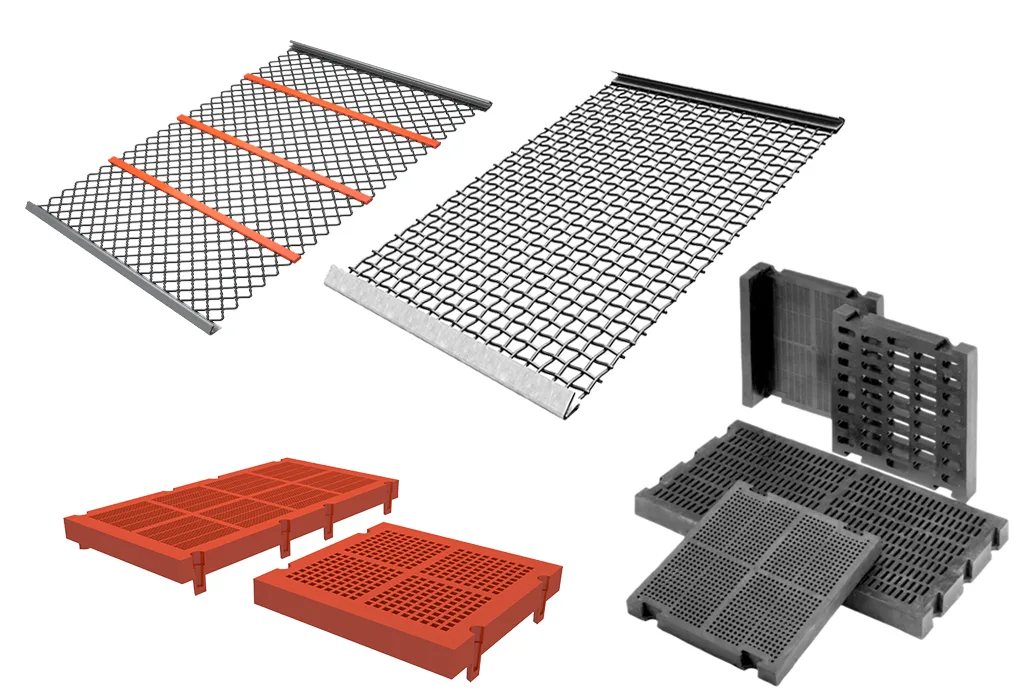
The efficiency of a mineral processing circuit depends on the physical interaction between the raw feed and the vibrating deck. In high-capacity environments, a deviation of just 2% in the wire diameter of a screen mesh can result in a 10% loss of usable product because of increased "near-size" particle blockage.
Most facilities in North America and Europe have moved toward high-carbon spring steel or 304 stainless steel for basic sizing. These materials provide the tensile strength needed to withstand G-forces exceeding 4.0g without experiencing premature fatigue fractures in the weaving nodes.
| Performance Metric | Woven Wire (High-Carbon) | Polyurethane (Cast) | Rubber (Compression Molded) |
| Open Area | 55% - 72% | 38% - 50% | 25% - 42% |
| Impact Resistance | Moderate | High | Excellent |
| Noise Reduction | 0 dB (Baseline) | -6 dB to -10 dB | -8 dB to -15 dB |
| Operating Life | 150 - 400 Hours | 1,200 - 3,500 Hours | 2,000 - 5,000 Hours |
Selecting the correct screening media ensures that the plant maintains a consistent "cut point" throughout the entire production shift. If the moisture content of the aggregate exceeds 4%, the probability of blinding—where fines stick to the surface—increases by 60% when using standard square apertures.
To combat this, manufacturers utilize self-cleaning configurations where independent wires vibrate at different frequencies to shake off sticky particles. A 2025 study of 120 limestone quarries showed that switching to these "ripple" or "flex" designs increased total output by 18% during wet seasonal cycles.
Engineering the aperture shape—choosing between square, rectangular, or slotted openings—impacts the flow rate and the shape of the final aggregate. Slotted openings allow for 25% more volume but can let through "flaky" or elongated particles that may fail ASTM elongation tests.
The mechanical interface between the panel and the screen box must be verified for compatibility with existing side-tensioned or modular rails. About 35% of premature failures are caused by improper tensioning, which allows the mesh to "whip" against the support bars, creating heat and friction.
Polyurethane remains a popular choice for wet applications due to its natural lubricity and resistance to chemical corrosion from wash water. Modern injection-molding processes allow for precise taper in the apertures, where the bottom of the hole is wider than the top to prevent pegging.
-
Verify the Shore A hardness of the polymer (85 for impact, 90+ for high-abrasion sand).
-
Inspect the internal reinforcement, such as high-tensile steel cables or aramid fibers, which prevent stretching.
-
Request a 100% load test report for modular panels used in heavy primary scalping stages.
During the 2026 fiscal year, mining operators are prioritizing materials that reduce on-site noise levels to meet stricter environmental regulations. Rubber panels, though offering slightly less open area, reduce decibel output by as much as 12 dB, creating a safer work environment for ground crews.
The total cost of ownership is calculated by dividing the initial purchase price by the total tons processed before the surface wears thin. While synthetic panels cost 4 to 5 times more than wire mesh, their 10x lifespan often results in a 40% reduction in the cost-per-ton of finished material.
Logistics and lead times are influenced by the proximity of the manufacturing plant to the site or major shipping hubs. Direct manufacturers that maintain regional warehouses can reduce emergency downtime by shipping replacement sections in under 48 hours, compared to the 14-day window typical of third-party resellers.
Technicians should provide a complete gradation analysis of the feed material to the manufacturer before finalizing an order. If the feed contains more than 20% "half-size" material, the risk of surface blinding drops, allowing for the use of thicker, more durable wires that extend the replacement cycle.
A 2025 experimental sample of 50 gold mines revealed that color-coded wear indicators embedded in synthetic panels reduced unplanned stoppages by 22%. Operators can visually check the deck from a distance and schedule maintenance when the secondary color layer becomes visible.
Environmental sustainability is becoming a standard part of procurement, with 15% of new rubber media now utilizing recycled industrial components. These hybrid materials maintain 98% of the performance of virgin rubber while supporting regional ESG (Environmental, Social, and Governance) targets.
The shift toward 3D-modeled deck layouts allows for "hybrid" setups where different materials are used on different sections of the same machine. For instance, putting heavy rubber at the feed end and high-flow wire mesh at the discharge end can optimize both durability and sizing accuracy.
Successful buyers maintain a digital log of every screen change to identify patterns in wear and tear. This data allows for the adjustment of vibration stroke and frequency, which can add another 500 hours to the lifespan of the media when calibrated correctly to the material density.